
The Eco House
Piling & Ground Beam

“Once demolition is complete, accuracy becomes everything. From this point on, accurate dimensions matter. The work that follows establishes the physical coordinates of the entire building, both below ground and above. Guide walls, piling and ground beams are not just structural operations; they are the moment where design intent is permanently fixed into the ground.”
— Oliver Steele-Perkins, Chartered Construction Manager

Guide Walls & Setting Out: Fixing the Building in Space
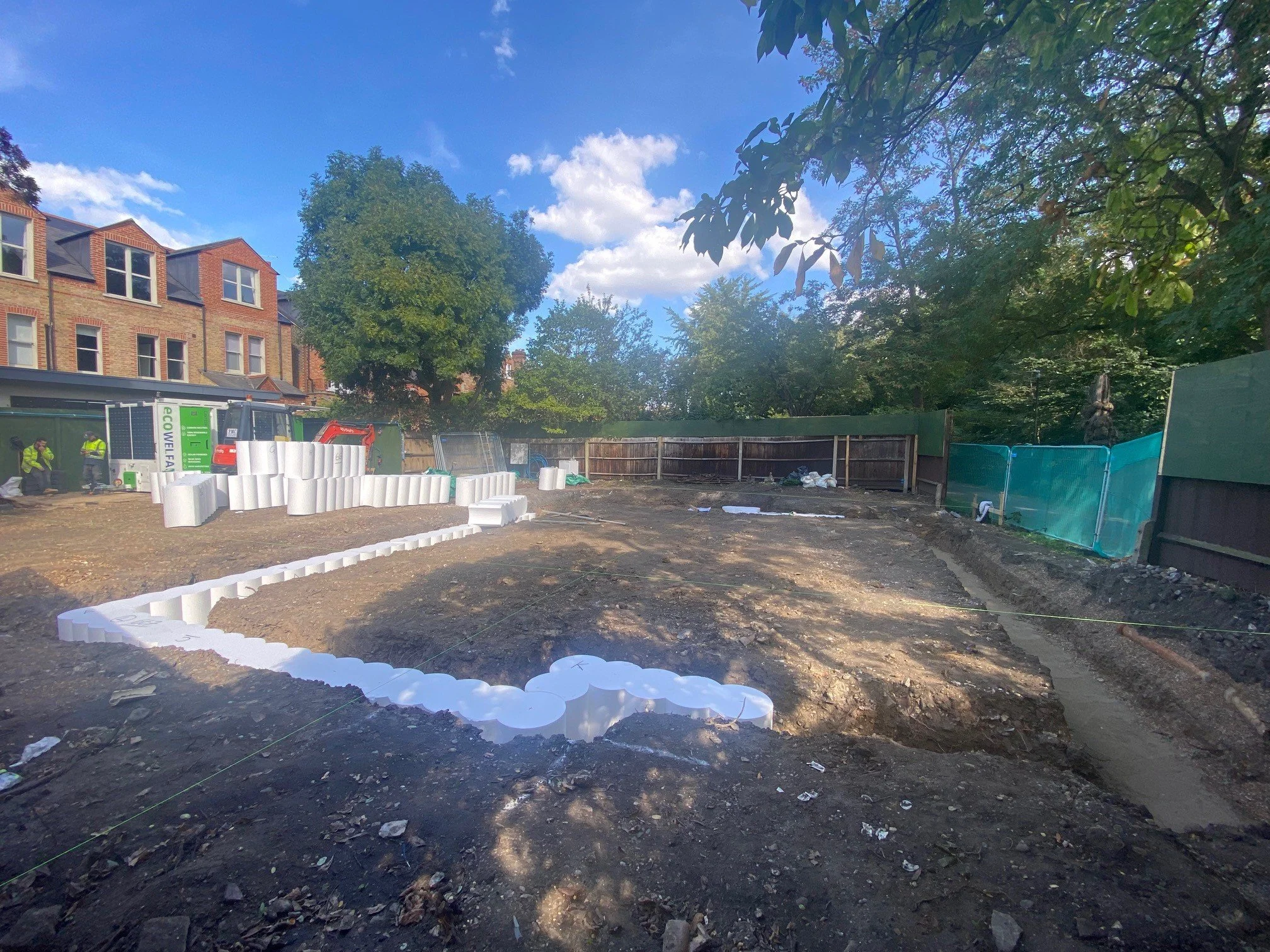
Before piling can begin, guide walls and polystyrene formers are installed to ensure the piling auger enters the ground in the designed position.
The polystyrene formers are set out using accurate measurements derived from the architect’s drawings, and site topographical survey and relate to the approved planning drawings. This is a critical point:
The position of the guide walls determines where the piles are installed
The piles determine the location of the basement walls
Which in turn fixes the external walls of the superstructure
In effect, this stage locks the building’s footprint, wall thicknesses, and internal dimensions into the ground.
Once the formers are accurately positioned, concrete is poured either side to form the guide walls. After curing, the polystyrene is removed, debris cleared, and the site prepared for the arrival of the piling contractor. A clean, obstruction-free site at this stage is essential to avoid delays once specialist contractors mobilise.
Piling Works: Specialist Coordination and Risk Management
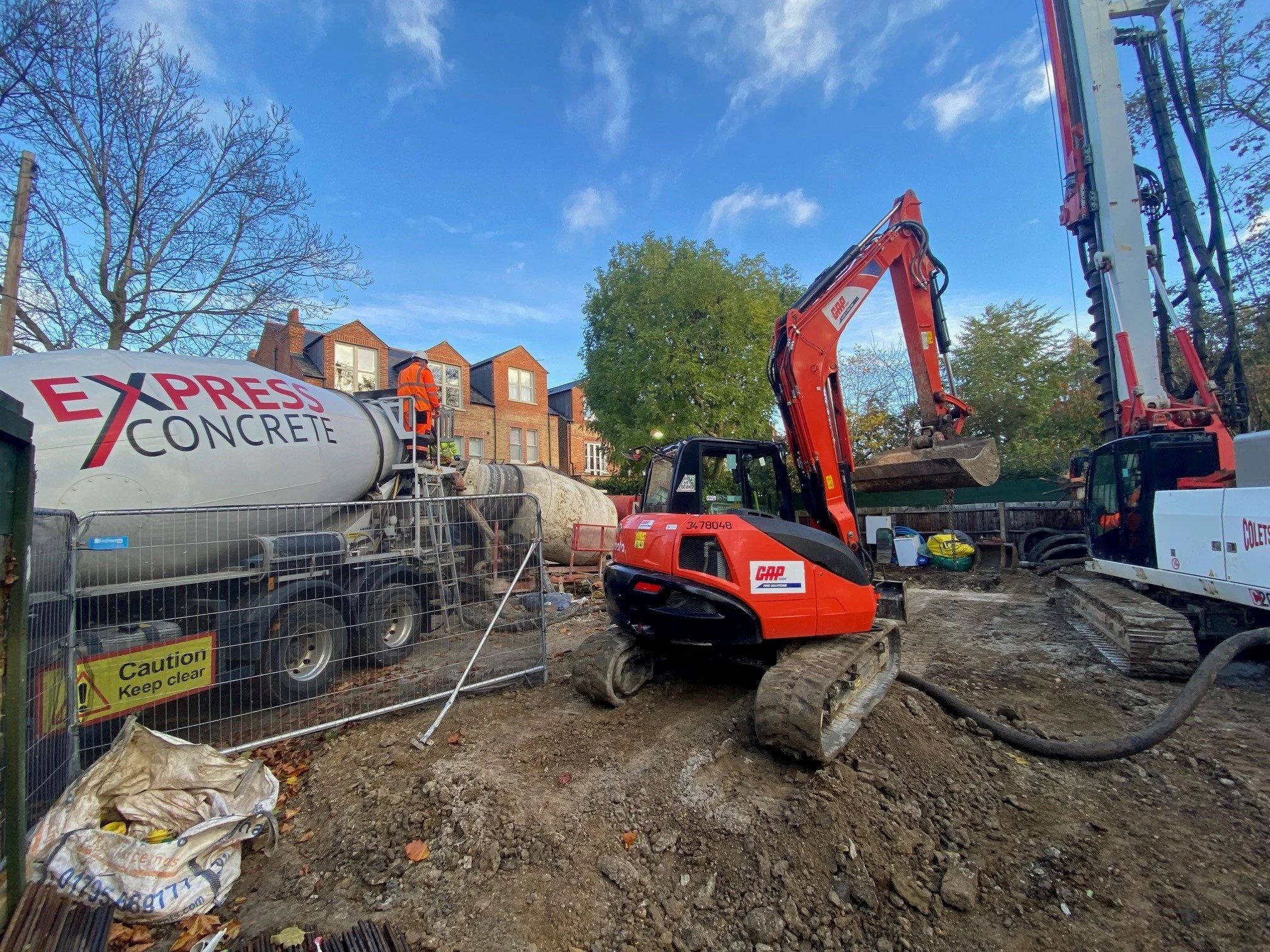
Piling is undertaken by specialist subcontractors, and once their contract starts, standing time is expensive. Any delay caused by poor preparation, access issues, or unresolved constraints quickly becomes an additional cost.
Ahead of arrival:
Site clearance and access routes are finalised
Vehicle movements and deliveries are coordinated
Any necessary liaison with the local authority for large loads is completed
The outline piling design is prepared early by the project structural engineers. In parallel, the piling contractor develops the detailed piling design, which is submitted back to the engineers for approval well in advance of site works.
Temporary works required during basement excavation are also considered as part of this coordinated design process.
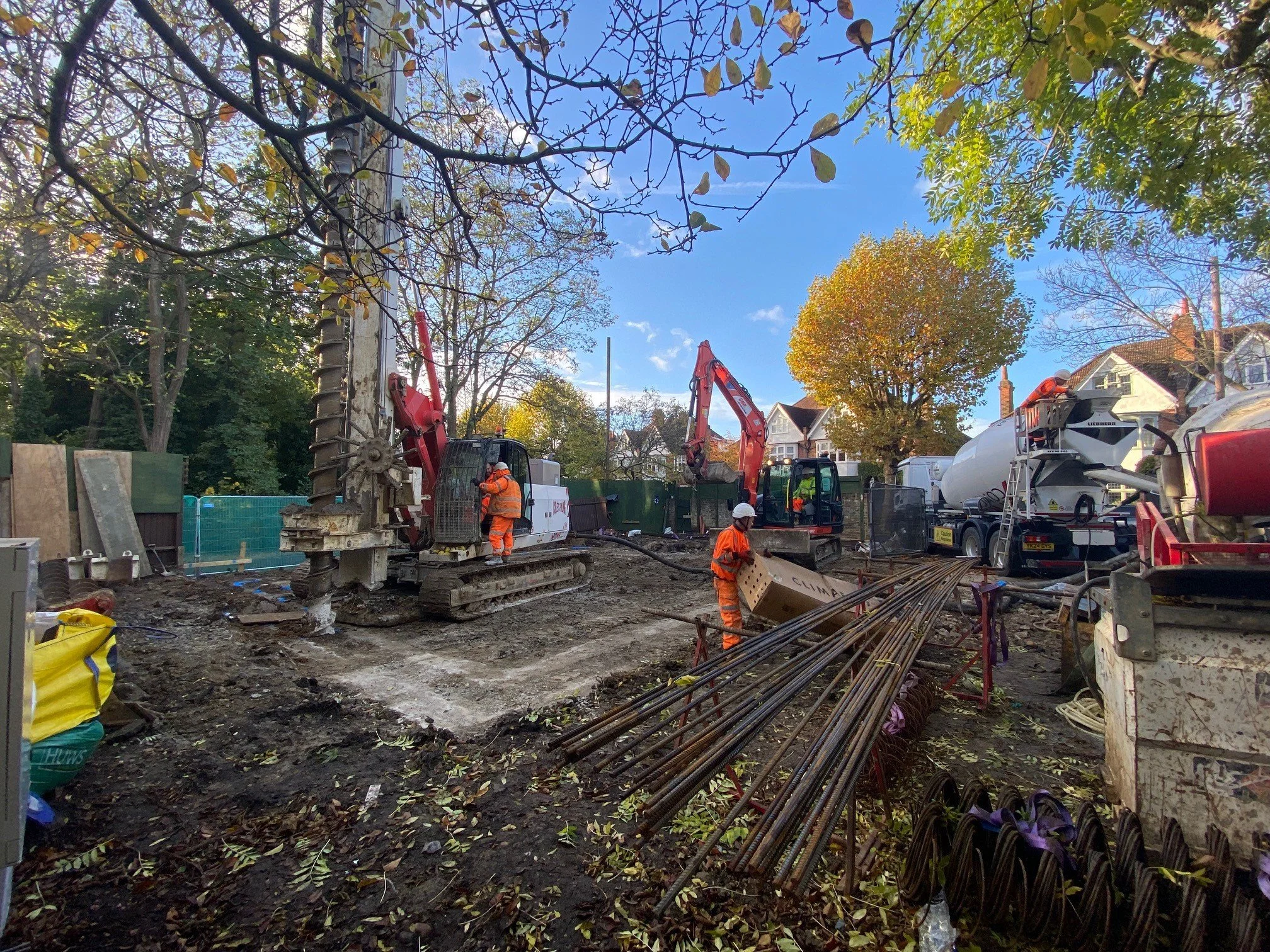
Rigs were delivered to site at the end of the week, allowing for an 8am Monday start, maximising productive time on site.
Working below ground always carries risk. That risk is reduced through:
Ground investigations
Drainage surveys
Probing
Accurate setting out
Well-constructed guide walls
In this case, additional preparation was required. Overhanging tree limbs from adjacent public land were cut back with council agreement. Without this, the height of the piling rig would have resulted in unavoidable downtime. Early identification and action prevented delays once the rig was on site.
Ground (Ring) Beam
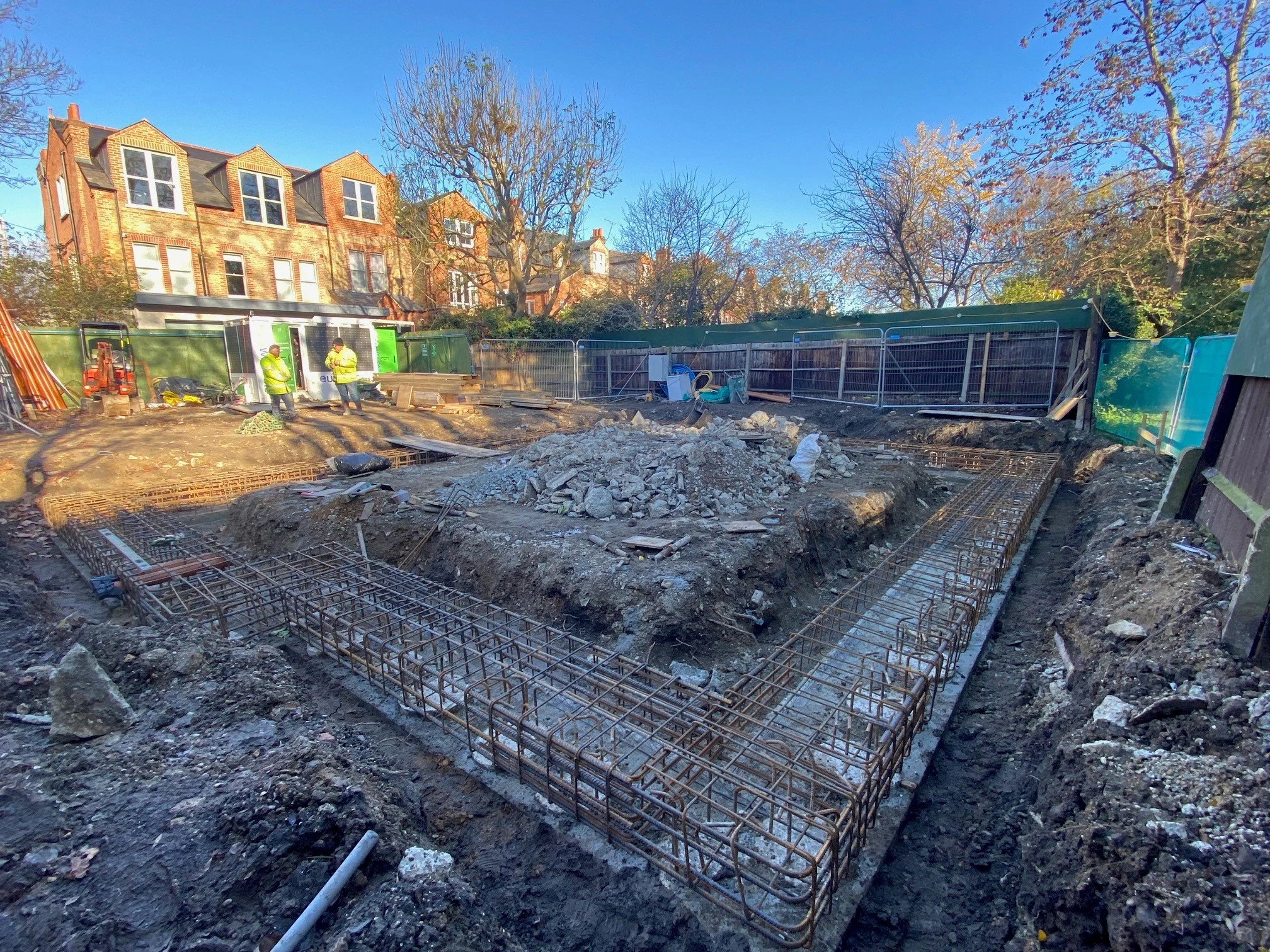
Once piling is complete, the piling contractors leave site and the groundworks continue with construction of the ring (ground) beam.
This stage involves:
Trimming pile heads to the correct level
Exposing reinforcement bars within the piles
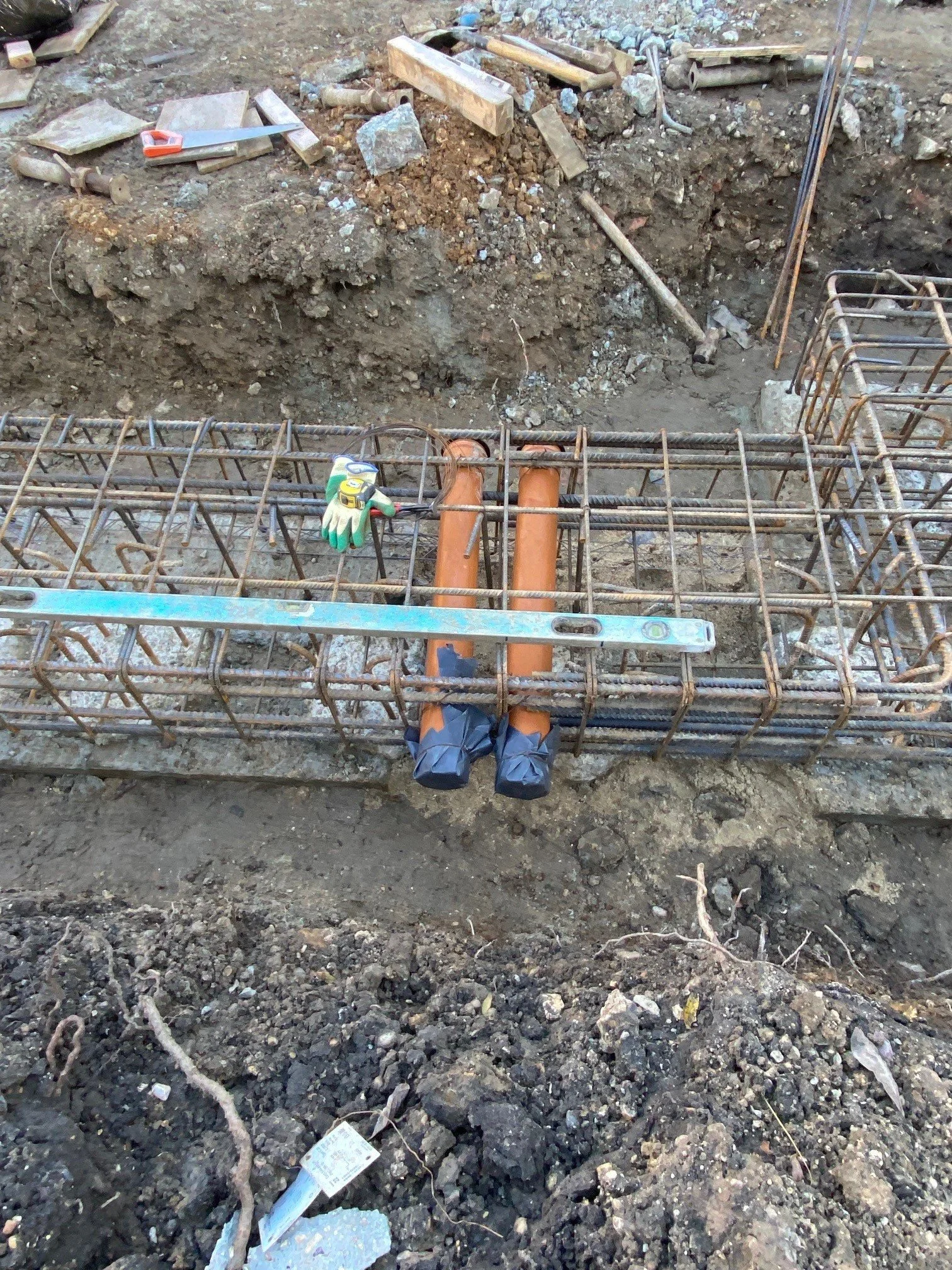
Installing reinforcement for the ground beam
The purpose of the ground beam is twofold:
Tie the piles together structurally at the top
Provide a stable foundation for the superstructure and ground floor construction
The ground beam reinforcement is designed well in advance by the structural engineers and is physically tied into the pile reinforcement on site. At this point, compliance inspections are needed.
Compliance Inspections
Before concrete is poured:
Building Control inspections are arranged
Structural Warranty inspections are carried out
Drainage runs and service ducts are positioned within the beam
Each pile also undergoes integrity testing prior to beam construction. In this project, Category A integrity testing was achieved, this confirms full structural continuity of each pile and is typically required where basements and high structural reliance are present. The integrity reports must be reviewed and accepted before inspectors attend site.
Only once inspections are signed off does the final concrete pour take place.
With the ground beam complete, the structure is now tied together at foundation level, and the project is ready to move into basement excavation.
Planning a New Build?
Lets Get It Right from the Start
Building your own home is a major investment, and the early decisions matter most. If you’re planning a new build and want professional guidance on procurement, planning, and cost control, we can help.
Whether you're just starting out or already in the design phase, we offer structured support to make your build smoother, smarter, and less stressful.
Guided Pathways
-

Plan It
Plan It equips you with the knowledge, tools, and structured processes to confidently design, budget, and prepare your homebuilding project, ensuring a smooth and well-managed build.
-

Build It
Build It equips you with the expertise, guidance, and step-by-step processes to manage your construction project effectively, ensuring quality, cost control, and timely completion.
-

Certify It
Certify It equips you with the knowledge and processes to navigate final inspections, compliance, and certification, ensuring your project is completed with the documentation needed to validate your investment.