The 3 Phases of a Successful Home Build
By Oliver Steele-Perkins MCIOB
Chartered Construction Manager
Introduction: Why most home builds don’t fail — they lose direction
Most homeowners don’t start a project expecting problems.
They have planning permission, a clear vision, and a sense of excitement about what’s to come. And yet, many projects slowly drift into difficulty, rising costs, delays, stress, and decisions being made under pressure.
This doesn’t usually happen because of poor intentions, bad builders, or ambitious designs.
It happens because nobody is leading the project as a whole.
Architects design.
Builders build.
Suppliers sell products.
But the project, the sequence, timing, cost exposure, risk, and decision-making all need leadership. And unless that leadership is clearly defined, it defaults to the homeowner.
This guide is designed to show you how to think and act like a construction project manager, so you can lead your project with clarity rather than guesswork, even if you’ve never done this before.
Not by giving you instructions to follow blindly, but by helping you understand:
what matters,
when it matters,
and why timing and structure make such a difference.
This framework is not about doing everything yourself, it’s about understanding what matters, recognising when decisions need support, and avoiding the most common mistakes homeowners make simply because nobody ever explained the process properly.

If you’re already at the stage where you want to talk through your project, you can do that here.
The Core Shift: From “A build” to “A managed process”
One of the biggest misunderstandings homeowners have is thinking of their project as a build, something that starts when a builder arrives on site.
In reality, construction is just one phase of a much longer, more tightly connected process.
Most of the cost, risk, and stress in a project is locked in before construction begins, often without the homeowner realising it.
A professional project manager doesn’t focus first on materials or suppliers.
They focus on:
sequence,
dependencies,
decision timing,
and exposure to risk.
Homebuilding Essentials is built around this same professional lens, broken into three phases that reflect how projects actually work in the real world:
Plan It → Build It → Certify It
This document introduces that framework so you can start using it immediately, even before you decide what your next step should be.

Phase 1: Plan It — Where projects are won or lost
Most people underestimate pre-construction.
They assume it’s a short gap between planning permission and starting on site. In reality, it is the platform that determines whether the build stage runs smoothly or unravels.
The biggest misconception
Most homeowners are unaware of how to sequence pre-construction.
They don’t realise that:
multiple workflows run in parallel, or what they are,
most actions have a trigger,
and one missed step can stall everything that follows.
Design development, surveys, compliance, cost planning, procurement strategy, warranties, and programming are all interconnected. Treat them as isolated tasks and the project becomes reactive very quickly.
A project manager’s role at this stage is to create order before momentum builds

Cost Planning: Almost always misunderstood
Cost planning is one of the most significant blind spots.
Many homeowners believe cost planning happens when a builder prices the drawings. By that point, most of the budget has already been locked in by design decisions.
True cost planning:
starts early,
evolves with the design,
and gives you financial visibility before you are committed.
It is not a single number.
It is a structured way of understanding:
what is included,
what is still an allowance,
where risk sits,
and which decisions drive cost the most.
When cost planning is misunderstood or delayed, projects don’t just run over budget, they force compromises later that could have been avoided entirely.
A project manager uses cost planning as a decision-making tool, not just a financial record.

Builder Timing: Speaking too soon is a common mistake
Another frequent issue is speaking to builders too early.
This usually comes from good intentions, wanting reassurance, wanting prices, wanting progress. But engaging builders before the project is properly defined often creates false expectations on both sides.
Without:
a clear scope, or sufficiently developed drawings from architects, engineers, and specialist suppliers eg, timber frame, mechanical and electrical design,
an agreed procurement strategy,
and an understanding of programme and preliminaries,
any early pricing is speculative at best, misleading at worst.
Professional projects introduce builders at the right moment, with the right information, and for a clear purpose. Timing here is not about speed, it’s about control.
Procurement: A decision most people don’t realise they’re making
Many homeowners don’t realise they are “procuring” a project at all, yet procurement decisions shape risk, cost certainty, flexibility, and responsibility.
Different routes suit different projects, budgets, and levels of involvement. What matters most is not which route you choose, but that you understand:
what you are taking on,
what you are passing to others,
and where the risk actually sits,
and how to structure this early to reduce risk, ensure contractual alignment between all suppliers.
This is an area where professional guidance early on can prevent potential issues at completion or years later if a building defect surfaces.
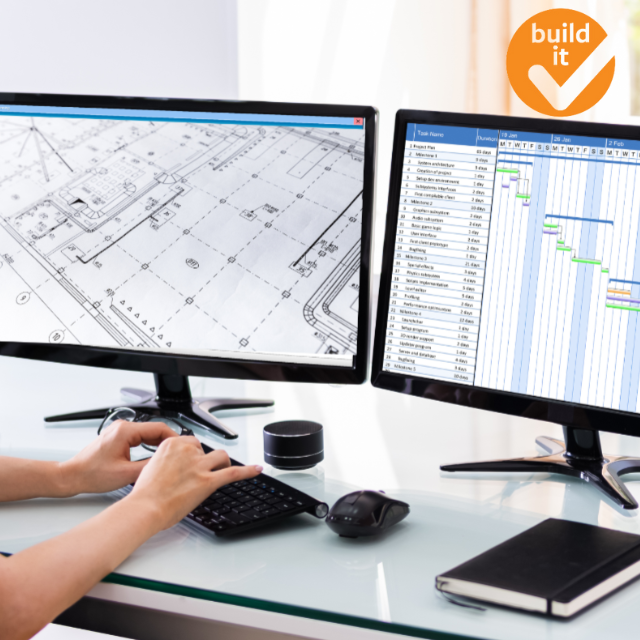
Phase 2: Build It — Control, not reaction
Once construction begins, the project gains momentum, and so do the consequences of earlier decisions.
This is where many homeowners feel they are “managing” the project, when in reality they are moving with it
A project manager’s role during construction is not to interfere with building work. It is to:
maintain control of time,
maintain control of cost,
and protect the client from avoidable exposure.
Variations and change
Change happens on every project. The issue is not change itself, but how it is assessed, recorded, and agreed.
Without structure:
small changes accumulate unnoticed,
costs lose visibility,
and disputes become more likely.
Time really does equal money
Delays are rarely neutral. Extra time on site usually means extra cost — particularly through preliminaries such as site management, access, welfare, and temporary works.
Understanding how programmes work, what genuinely affects the critical path, and how extension-of-time requests should be reviewed is part of leading a project responsibly, not being difficult.
A calm, structured approach protects relationships and your budget.
Phase 3: Certify It — Protecting the investment you’ve just built
Many homeowners assume the project ends when the work looks finished.
Professionally, this is simply not true.
Certification, documentation, warranties, and handover information are what protect:
the value of the home,
its future saleability,
and the ease with which it can be lived in and maintained.
O&M: Often overlooked, always valuable
An Operation & Maintenance (O&M) manual is not technical admin. It is the instruction manual for your home.
When it’s done properly, it:
reduces stress,
simplifies maintenance,
and prevents costly guesswork years later.
When it’s rushed or incomplete, homeowners often discover the consequences long after the builder has gone.
A project manager treats O&M and close-out documentation as part of the build itself, not an afterthought.

The bigger picture: What this framework is really for
This framework is not about doing everything yourself.
It’s about:
understanding what matters,
recognising when decisions need support,
and avoiding the most common mistakes homeowners make simply because nobody explained the process to them.
Many people don’t need more information.
They need guidance, structure, and reassurance at the right moments.
What Happens Next
If you’ve read this and thought:
“This makes sens, but I wouldn’t want to do this without support.”
That’s the right reaction.
There are two sensible next steps:
Option 1: Book a 30-minute consultation
A calm, practical conversation to understand your project, your stage, and whether Homebuilding Essentials is actually right for you.
If it is, I’ll tell you.
If it isn’t, I’ll tell you that too.
Option 2: Enter the Guided Pathway
If you already know you want structured, professional guidance through Plan It, Build It, and Certify It, you can step straight into the pathway.
Either way, the goal is the same:
To lead your project with clarity, confidence, and control, not guesswork.

Homebuilding Essentials
Professional thinking for homeowners who want to do this properly.